 English
 中文简体
中文简体

+86-13676695112
+86-18868136522
+86-576-87733908
High pressure gear pumps are used in many industrial processes where fluids need to be transferred at controlled flow rates and relatively high pressures. They can be found in hydraulic systems, chemical equipment, fuel handling, lubrication systems, polymer processing, and other machinery.
However, one gear pump does not work equally well with every fluid. Viscosity, temperature, chemical compatibility, abrasiveness, lubrication properties, and required pressure all affect pump selection.
For manufacturers, distributors, system integrators, and industrial buyers, choosing High Pressure Gear Pumps should therefore start with the fluid and operating conditions. The pump's gear material, housing, shaft, seals, pressure rating, and speed all need to fit the application.
This article looks at common industrial fluids and explains what pump characteristics buyers should consider.
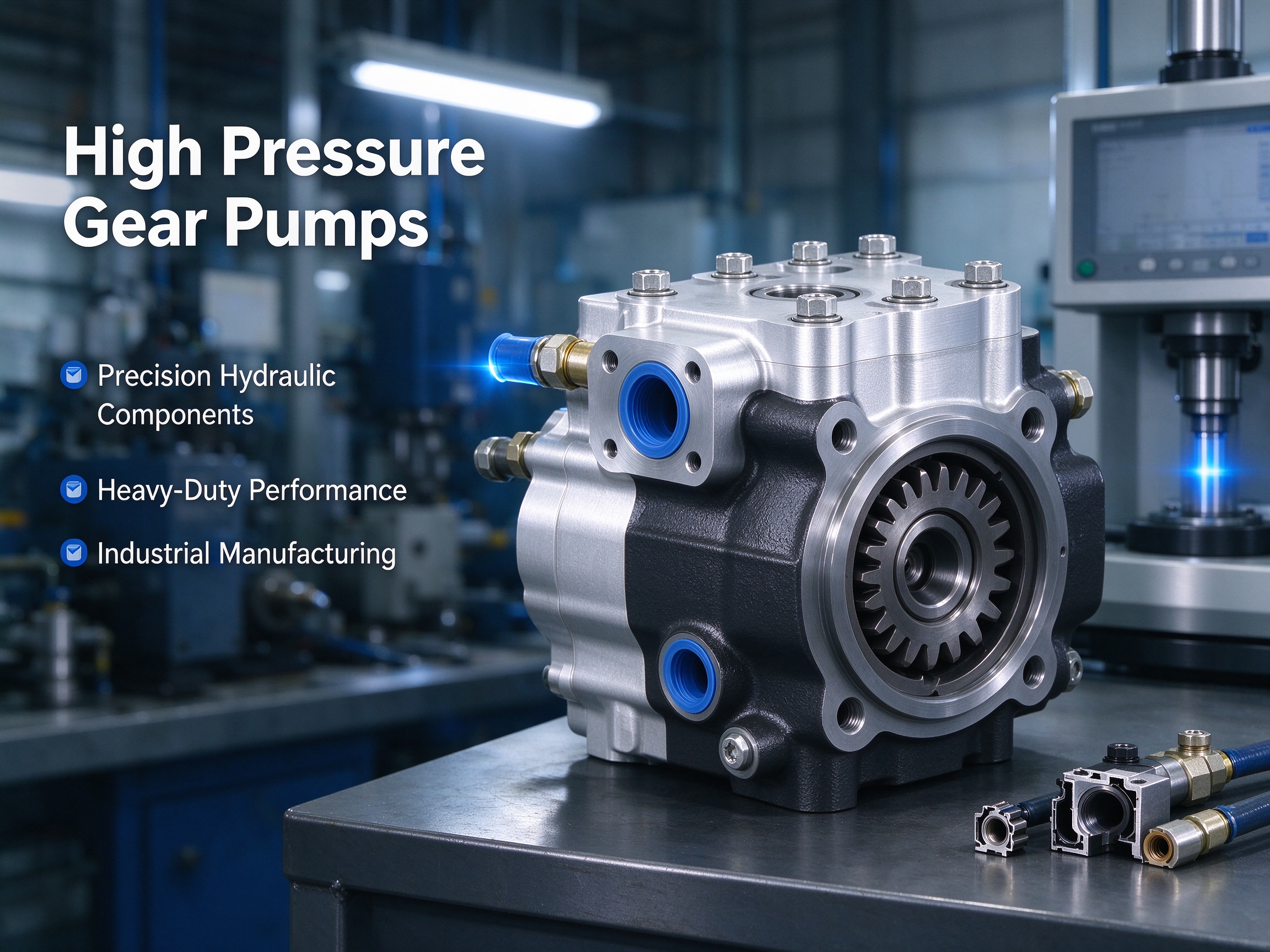
Gear pumps are positive displacement pumps. They move fluid by carrying it through the spaces between the gear teeth and the pump housing.
This makes them useful for applications requiring relatively steady, controlled flow. They are often well suited to liquids with moderate or high viscosity.
The fluid itself has a major influence on pump performance.
Before selecting a pump, buyers should identify:
A pump designed for lubricating oil may not be suitable for a corrosive chemical, even when the pressure and flow requirements appear similar.
Hydraulic oil is one of the most familiar applications for gear pumps.
These systems require the pump to provide stable fluid delivery while operating under pressure. Pump selection depends on hydraulic circuit design, oil viscosity, operating temperature, and required flow.
For hydraulic oil applications, buyers often focus on:
| Hydraulic application | Important pump considerations |
|---|---|
| Mobile machinery | Compact size, pressure, speed |
| Industrial hydraulics | Continuous-duty capability |
| Power units | Flow stability and pressure rating |
| Agricultural equipment | Contamination tolerance and durability |
The oil should also be maintained properly. Contamination can accelerate wear in gears, bushings, and other internal components.
Gear pumps can be suitable for lubricating oils because these fluids generally provide useful lubrication for the pump's moving components.
However, not all lubricants have the same viscosity.
Heavy gear oil and lighter lubricating oil can behave very differently, especially during startup.
A high-viscosity fluid can increase starting torque and may require a lower pump speed. A low-viscosity fluid can increase internal leakage in some pump designs, reducing volumetric efficiency.
For buyers, it is useful to provide the manufacturer with the actual viscosity range instead of simply describing the fluid as "oil."
One of the strengths of gear pumps is their ability to handle many viscous liquids.
Examples can include:
Higher viscosity generally requires more attention to inlet conditions and drive power.
A pump that works well with a thin liquid may not be suitable for a thick fluid because the motor needs to overcome greater resistance.
The pump's inlet design is also important. Long or restrictive suction piping can make it difficult for a high-viscosity liquid to reach the pumping chamber.
Gear pumps can be used for certain fuel-transfer applications, including diesel and selected fuel oils.
In these systems, buyers need to consider both the pump body and components exposed to the liquid.
Important areas include:
Fuel systems may also have specific safety requirements depending on the location and equipment design.
A pump should be selected for the exact fuel type because different fuels and additives can affect seals and elastomer components differently.
Chemical processing is one area where pump selection becomes more demanding.
Some chemicals can attack carbon steel, aluminum, elastomers, or other common pump materials. The concentration and temperature of the chemical can also change its behavior.
For chemical applications, manufacturers may use stainless steel, specialized alloys, engineering plastics, or specific seal materials.
| Fluid characteristic | Selection focus |
|---|---|
| Corrosive chemical | Wetted-part material |
| High temperature | Seal and material temperature resistance |
| Low viscosity chemical | Internal leakage and clearance |
| High viscosity chemical | Inlet flow and drive torque |
| Chemically aggressive additive | Seal compatibility |
Buyers should provide the chemical name, concentration, operating temperature, and viscosity to the manufacturer whenever possible.
A general statement such as "chemical resistant" is not enough for technical selection.
Certain manufacturing processes use gear pumps to move polymers, resins, or other process materials.
These fluids can have high viscosity and may require stable, controlled flow.
In such applications, temperature management becomes especially important because viscosity can change significantly with temperature.
Pump selection may involve:
For these applications, buyers should discuss the complete process conditions with the pump manufacturer before selecting a standard model.
Industrial adhesives can range from relatively thin liquids to highly viscous materials.
Some adhesives may also contain solvents or additives that affect seal and material selection.
A suitable gear pump needs to provide the required flow without creating problems for the adhesive.
Important information includes:
The pump should also be easy to clean if the adhesive can cure or harden when production stops.
Some paints, inks, and coatings contain pigments or fine solid particles.
These particles can contribute to wear in the pumping elements, especially if the pump is not designed for abrasive service.
For such fluids, buyers should consider:
A gear pump may be suitable for some inks and coatings, while another application may require a different pump technology.
The fluid formulation should therefore be reviewed before making a final choice.
Water has a much lower viscosity than oils and many other industrial liquids.
Standard gear pumps can have increased internal leakage with low-viscosity fluids because the fluid does not seal the internal clearances as effectively.
For water or water-like liquids, the pump's internal clearance, material, and operating speed become particularly important.
Corrosion resistance also matters, especially when the pump is exposed to treated water, saltwater, or aggressive cleaning solutions.
In some applications, another positive-displacement or centrifugal pump design may be more suitable depending on pressure and flow requirements.
Fluids containing solid particles can be challenging for gear pumps.
Particles may enter the clearances between the gears and housing, causing wear on the gear teeth and internal surfaces.
Examples include certain slurries, filled resins, and contaminated industrial liquids.
If abrasive particles are unavoidable, buyers should discuss:
Filtration upstream of the pump can be useful when the process allows it.
Fluid viscosity often changes with temperature.
As temperature rises, many liquids become less viscous. As temperature falls, they become thicker.
This has direct implications for gear-pump performance.
A pump selected around one operating temperature may behave differently at startup or during seasonal temperature changes.
| Temperature condition | What to consider |
|---|---|
| Cold startup | Higher viscosity and starting torque |
| Normal operation | Stable viscosity range |
| High temperature | Seal, material, and lubricant limits |
| Temperature cycling | Expansion and changing clearances |
For industrial applications, buyers should provide both minimum and maximum fluid temperatures.
The required pressure is another major specification.
Operating at higher pressure increases the mechanical load on gears, shafts, bearings, and the housing.
Rotational speed also affects flow and mechanical stress.
A simple relationship for a positive-displacement gear pump is:
Flow ≈ displacement per revolution × rotational speed × volumetric efficiency
As speed rises, theoretical flow increases, but actual flow is affected by slip and other losses.
High speed can also increase heat generation and wear.
For this reason, the pump should be selected around the required flow and pressure range instead of simply choosing the highest RPM available.
Material selection is one of the areas where a High Pressure Gear Pumps manufacturer can provide application-specific solutions.
Depending on the fluid, manufacturers may customize:
For example, a corrosive fluid may require corrosion-resistant wetted parts, while an abrasive fluid may call for harder wear surfaces.
The final design should balance fluid compatibility, pressure, temperature, and production cost.
Before ordering, buyers should prepare detailed information about the application.
| Question | Why it matters |
|---|---|
| What fluid will be pumped? | Determines material compatibility |
| What is the viscosity? | Affects speed and inlet conditions |
| What is the operating temperature? | Influences seals and materials |
| What flow rate is required? | Determines displacement and speed |
| What pressure is required? | Determines structural requirements |
| Are particles present? | Helps assess wear risk |
| What is the duty cycle? | Supports durability selection |
| What motor is available? | Confirms drive compatibility |
| Are custom materials needed? | Important for chemical or abrasive fluids |
| What testing is provided? | Supports quality evaluation |
Detailed fluid information can make supplier recommendations much more accurate.
A high-pressure pump needs consistent internal dimensions and reliable assembly.
Depending on the product, manufacturers may check:
For B2B buyers, test conditions should be clearly defined. A flow or pressure number has little value without knowing the fluid viscosity, temperature, speed, and test setup.
Before a large order, buyers should test the pump under representative operating conditions.
The trial can evaluate:
This is particularly important for unusual fluids or custom pump designs.
Testing can also reveal whether the pump's inlet conditions are adequate for the actual installation.
A simple comparison can help buyers narrow down their options.
| Industrial fluid | Main pump selection priority |
|---|---|
| Hydraulic oil | Pressure, flow, durability |
| Lubricating oil | Viscosity and speed |
| Diesel/fuel | Materials and seal compatibility |
| Chemical liquids | Corrosion and chemical resistance |
| Resin/polymer | Viscosity and temperature |
| Adhesive | Viscosity, cleaning, material compatibility |
| Ink/coating | Wear resistance and solids content |
| Water-based fluid | Low-viscosity performance and corrosion resistance |
These are starting points. The specific formulation and operating conditions should determine the final pump specification.
The best High Pressure Gear Pumps depend on the fluid being pumped and the conditions under which the system operates.
Hydraulic oil and lubricating oil generally place emphasis on pressure, viscosity, speed, and durability. Fuel applications require suitable seals and materials. Chemical fluids can demand corrosion-resistant wetted components. High-viscosity polymers and adhesives may require careful attention to temperature and inlet conditions. Water and other low-viscosity liquids require closer consideration of internal clearances and volumetric efficiency.
For manufacturers, wholesalers, and industrial buyers, the most useful sourcing process starts with complete application information. Fluid type, viscosity, temperature, pressure, flow, particle content, and duty cycle give the manufacturer a better basis for selecting a suitable pump.
A gear pump should be viewed as part of the complete fluid-handling system. The pump, motor, piping, filtration, valves, seals, and process conditions all affect performance.
For demanding applications, sample testing is a practical way to confirm whether the selected pump works with the actual fluid. It can also help identify adjustments needed in materials, speed, or pump configuration before mass production.
By matching pump design to the real fluid properties and operating conditions, B2B buyers can select a more suitable solution for industrial fluid transfer and high-pressure applications.
We focus on the research, development, manufacturing and service of various high-pressure and high-displacement gear pumps and related products and copper and woodblock printing machines.
Are You Ready To Cooperate
With Xianju Liming Machinery Co., Ltd. ?
* Your email is safe with us, we don't spam.

Xianju Liming Machinery Co., Ltd. specializes in the production of various high-pressure and high-displacement gear pumps and related products. We also specialize in producing various specifications of copperplate engraving machines, woodblock printing machines and other printmaking art equipment.
Contact Info
+86-13676695112
+86-18868136522
+86-576-87733908
+86-576-87719094
No. 407, Chuancheng North Road, Anzhou Street, Xianju County, Taizhou City, Zhejiang, China.
Mobile web
