 English
 中文简体
中文简体

+86-13676695112
+86-18868136522
+86-576-87733908
Picking a hydraulic gear pump isn't just about matching a flow rate on a datasheet. Size it too small and the machine moves slower than you planned. Run it past its pressure or speed limits and you'll be dealing with wear and heat. Sometimes those problems don't show up until the equipment has been out in the field for a while.
For OEMs, the choice starts with how the machine actually works. Flow and pressure get the attention, but operating hours, oil temperature, shaft speed, and installation conditions matter just as much. Seasoned Hydraulic Gear Pump Suppliers can help engineers check these details before anyone settles on a model.
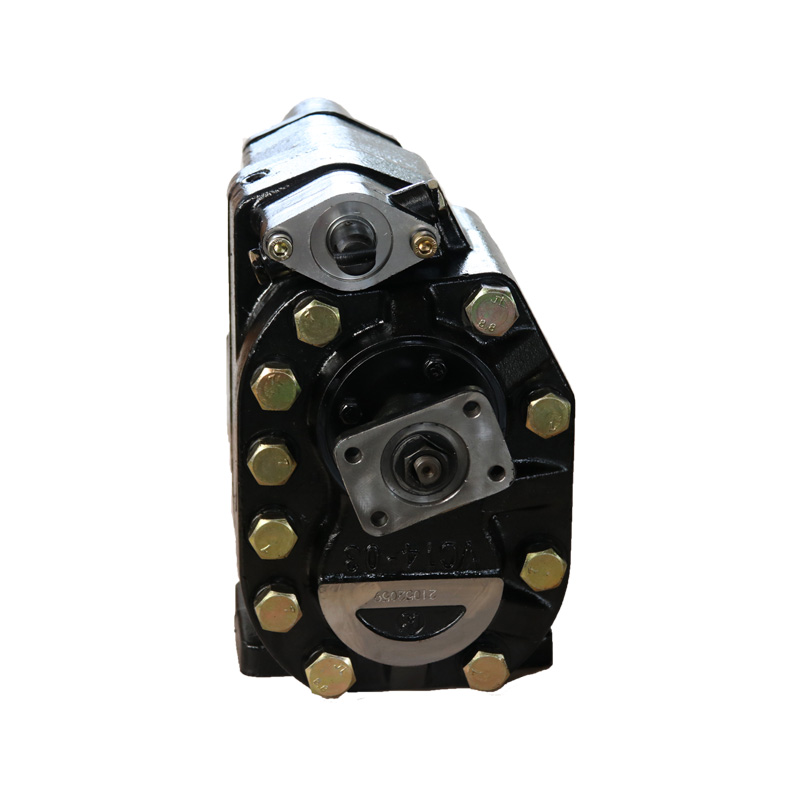
Flow rate dictates how fast the cylinders extend and how quick the motors turn. What you actually need depends on actuator size, target cycle time, and whether a few functions want to run at the same time.
Pump displacement and rotational speed give you a starting point. The theoretical flow works out like this:
Theoretical flow (L/min) = Displacement (cm³/rev) × Speed (rpm) ÷ 1,000
So a 20 cm³/rev pump spinning at 1,500 rpm gives a theoretical 30 L/min. Real output runs lower, because some oil slips back internally as the pump turns.
That gap matters under load. Internal leakage grows as pressure climbs, so a pump that looks fine at light load may not hold actuator speed when the work gets heavy.
OEMs should also look at the drive-speed range. A pump bolted to an engine sees speed swing around; one on an electric motor usually turns steadier. Gear pump suppliers can use that detail to suggest a displacement and hand you flow numbers closer to reality.
The pressure a system needs comes down to the load it has to move. A lifting machine, for instance, asks for little pressure when it's empty and quite a bit more once it's carrying material.
When you line pumps up side by side, look at continuous operating pressure, intermittent peak pressure, and the maximum allowable pressure. Those are three different ceilings. A pump that shrugs off a brief pressure spike isn't necessarily one you can run at that level all shift.
Don't forget the relief valve. The pump supplies flow; the resistance in the circuit builds pressure. The relief valve caps that pressure according to how the system is laid out.
Match the pump ratings to the hoses, fittings, valves, and seals. There's not much point picking a pump for a given pressure if the rest of the circuit can't live with the same conditions.
A pump that runs a few hours a day faces a different life than one grinding through several shifts. Even when the flow and pressure look similar, the long-term picture can diverge a lot.
Duty cycle covers operating hours, how often it starts and stops, and how much of the day is spent under heavy load. All of that feeds into heat buildup, lubrication, and wear.
Oil temperature is worth a close look. If the system can't shed enough heat, the fluid gets too hot and viscosity drifts out of the recommended window. That hits lubrication and pump efficiency.
Inlet conditions are another thing to check. A restricted suction line or weak inlet pressure brings on cavitation. Air getting into the system shows up as noise, vibration, and jerky machine movement.
When you talk to a supplier, walk them through a typical working day. Does the machine run straight through? Does it sit at high pressure for long stretches? That sort of detail narrows the options.
Before you lock in a model, run through these parameters together.
| Selection factor | What to check | Why it matters |
|---|---|---|
| Flow rate | Output at the intended speed and pressure | Keeps movements inside the cycle time you planned |
| Pressure rating | Continuous pressure and short peaks | Cuts the chance of early wear |
| Shaft speed | Min and max allowable rpm | Makes sure it mates with the drive |
| Duty cycle | Operating hours and load pattern | Helps keep heat and wear in check |
| Hydraulic fluid | Fluid type, viscosity, temperature | Supports lubrication and sealing |
| Installation | Mounting, shaft dimensions, port positions | Avoids last-minute design changes |
| Environment | Dust, vibration, ambient temperature | Points to extra protection you may need |
A pump can hit the flow target and still be wrong for the job—say its speed limit doesn't match the drive motor, or its pressure rating doesn't cover what the machine actually asks for.
A gear pump supplier should hand you more than a catalogue and a price. Technical support helps engineers sort through specs and catch compatibility issues before production kicks off.
They can suggest displacement based on the flow you need and the shaft speed you have, and they should bring performance curves, dimensional drawings, shaft details, and material specs.
Talk installation early too. Differences in mounting dimensions, port locations, or seal materials turn into extra work if you find out about them late in the design cycle.
Ask about testing and quality control as well. Depending on the application, you may want inspection records, test reports, and traceability docs. On a new machine, running a sample pump under real conditions can confirm it behaves the way you expect.
A request for quotation gives suppliers what they need to recommend the right parts. Put in the flow range, continuous and peak pressure, drive speed, duty cycle, hydraulic fluid, and operating temperature.
Mounting dimensions, shaft requirements, port configuration, space available, and expected production volume belong there too. If the machine lives in dusty conditions or takes heavy vibration, say so.
Price matters, but it shouldn't be the only thing. Consistency, technical support, delivery, and after-sales service all feed into what you actually own. The cheaper pump can end up costing more if it needs frequent swaps or fights you during install.
Choosing a hydraulic gear pump means looking at the whole application. Flow sets the output, pressure reflects the load, and duty cycle shapes how the pump holds up over time. Fluid, shaft speed, and installation weigh in just as heavily.
When you hand a qualified supplier a clear spec, you can compare realistic options and sort out trouble before production starts. That's the sort of approach that cuts down on design changes and keeps the machine running the way you want it to.
We focus on the research, development, manufacturing and service of various high-pressure and high-displacement gear pumps and related products and copper and woodblock printing machines.
Are You Ready To Cooperate
With Xianju Liming Machinery Co., Ltd. ?
* Your email is safe with us, we don't spam.

Xianju Liming Machinery Co., Ltd. specializes in the production of various high-pressure and high-displacement gear pumps and related products. We also specialize in producing various specifications of copperplate engraving machines, woodblock printing machines and other printmaking art equipment.
Contact Info
+86-13676695112
+86-18868136522
+86-576-87733908
+86-576-87719094
No. 407, Chuancheng North Road, Anzhou Street, Xianju County, Taizhou City, Zhejiang, China.
Mobile web
