 English
 中文简体
中文简体

+86-13676695112
+86-18868136522
+86-576-87733908
For artists, printmaking studios, art schools, and workshop operators, choosing a Wood Printer Machine is usually more complicated than comparing machine size or price. The machine has to work with the way a studio actually makes prints, including the size of woodblocks, paper types, printing pressure, production frequency, and the amount of control the artist expects during each impression.
A machine designed for woodblock printmaking should support consistent contact between the carved block, ink, and paper while still fitting the practical needs of the studio. Artists may prioritize control and traditional printing methods, while schools, shared studios, and commercial workshops may place more emphasis on repeatability, ease of operation, and maintenance.
This guide looks at the main factors worth checking before purchasing a machine for woodblock printing.
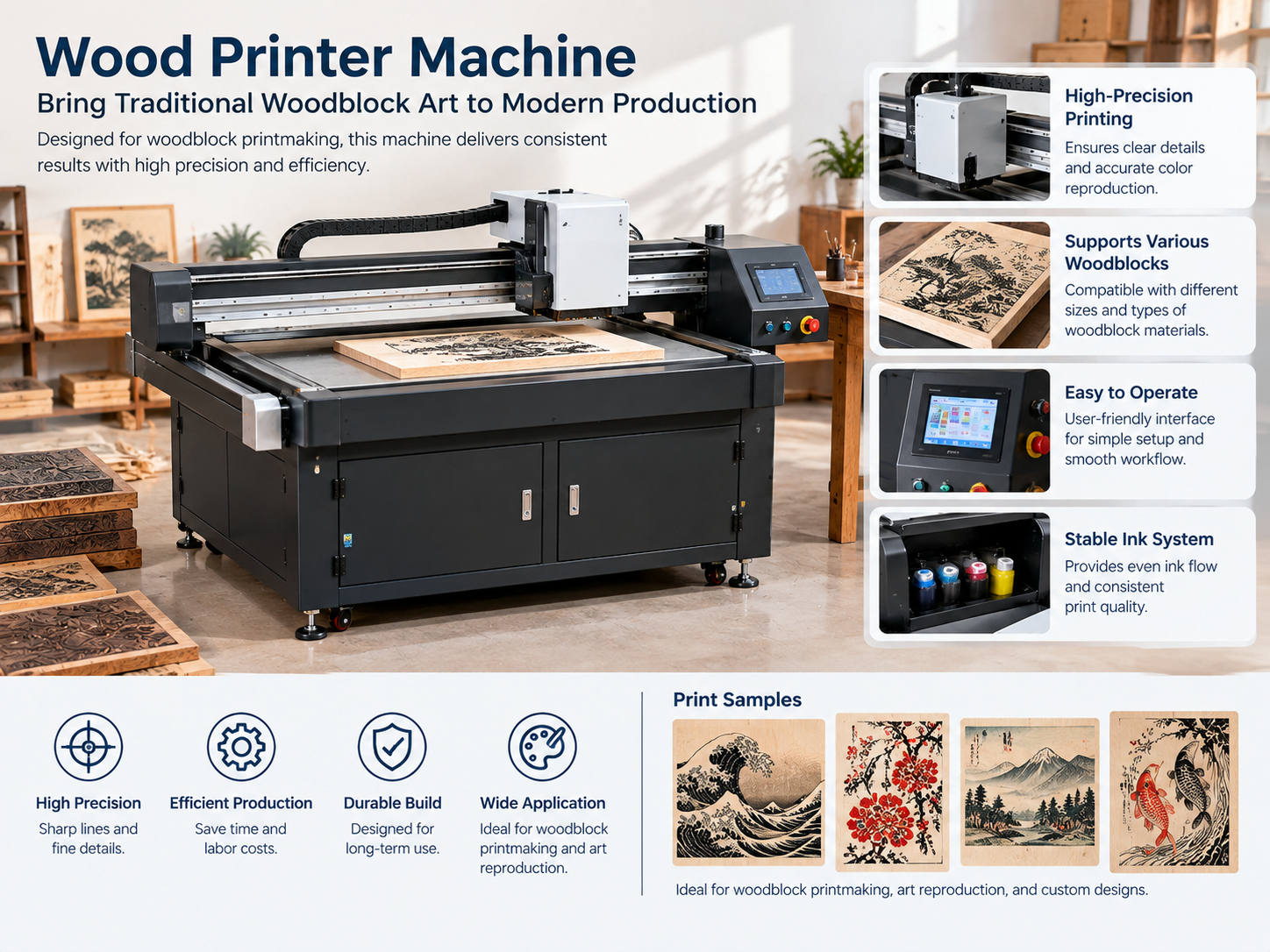
The first step is identifying the kind of printmaking the machine will support.
Woodblock printing can include traditional relief printing, artistic editions, workshop demonstrations, educational projects, and small-batch production. The requirements can vary considerably between these uses.
For example, an artist making limited-edition prints from relatively small blocks may not need a large working platform. A shared printmaking studio may need a larger machine that can accommodate different artists and block sizes throughout the week.
Before comparing specific models, it helps to define:
These details provide a much more useful starting point than simply choosing the largest available machine.
For woodblock printmaking, the basic job of the machine is to apply controlled pressure so the inked woodblock transfers the image onto the paper.
That sounds simple, but several factors affect the result.
Pressure needs to be distributed consistently across the printing area. The block and paper also need to remain stable during the pressing process. If the pressure is uneven, some parts of the image may appear darker or less defined than others.
For artists, this matters because subtle variations can change the character of a print.
A practical Wood Printer Machine should therefore provide a working structure that is stable, controllable, and suitable for the dimensions of the artist's materials.
A larger machine is not automatically more useful.
The effective working area should accommodate the largest block and paper size the studio expects to use, with enough practical space for positioning and handling.
If the machine is too small, artists may have to change their workflow or restrict the size of their prints. If it is much larger than necessary, it may consume valuable studio space without providing meaningful advantages for the intended work.
| Studio requirement | What to check |
|---|---|
| Small art prints | Compact working area and easy handling |
| Medium-size editions | Stable platform with sufficient working space |
| Large woodblocks | Large usable printing area and rigid structure |
| Teaching studio | Flexible setup for different users |
| Shared workshop | Easy adjustment and durable construction |
| Small commercial production | Repeatability and efficient operation |
The dimensions listed by a manufacturer should be reviewed carefully. Buyers should distinguish between the overall machine dimensions and the actual usable printing area.
Pressure is central to woodblock printing because it directly influences how the ink transfers from the carved surface to the paper.
Too little pressure may leave parts of the image weak or incomplete. Excessive pressure can affect the paper, ink transfer, or even the physical block, depending on the materials being used.
For this reason, artists should look at how the machine applies and controls pressure.
A machine may use a mechanical, screw-based, hydraulic, or other pressing mechanism depending on its design. The specific mechanism matters less than whether it provides the control and consistency required by the intended printmaking process.
For studio buyers, it is useful to ask how pressure is adjusted and whether the machine can maintain stable contact throughout the printing area.
Registration becomes especially important when creating multi-color prints.
The block and paper need to be placed in repeatable positions so each color is transferred to the same location. Even a small shift can create visible misalignment.
A stable printing bed and predictable movement can make registration easier to manage.
Artists should inspect:
A machine does not automatically solve registration problems, because paper preparation, block design, guides, and operator technique also matter. However, a stable machine can provide a more consistent foundation for the printing process.
Woodblocks are not all the same.
Different wood species have different densities, grain structures, and carving characteristics. The thickness of the block can also vary depending on the artist's technique and the intended application.
Before buying a machine, users should confirm that the working clearance and pressure arrangement can accommodate the blocks they normally use.
This becomes particularly important for studios that use a mixture of hand-carved blocks and prepared commercial blocks.
The machine should be selected around real materials. A specification that works for one block thickness does not necessarily provide the same practical flexibility for another.
The final print depends on more than the carved image and ink. Paper selection and handling are equally important.
Artists may work with different paper weights, textures, absorbency levels, and dimensions. Some papers are relatively delicate and require careful handling, while others are more robust.
A machine should make it reasonably easy to position and remove the paper without disturbing the block.
For repeated work, the workflow around loading, pressing, checking, and unloading can have a noticeable impact on productivity.
A machine that is technically capable but awkward to use may become frustrating in a busy studio environment.
Artists producing single-color prints may focus heavily on pressure consistency and basic handling. Multi-color printmaking introduces additional requirements for registration and repeatability.
A studio making editions may need to produce many impressions from the same block while maintaining similar pressure and positioning from print to print.
In that situation, operational consistency becomes increasingly important.
Before selecting a machine, buyers should consider whether their work involves:
A machine that suits a personal studio may not provide the workflow needed by a larger shared printmaking space.
In a professional or educational studio, several people may use the same equipment.
That means the machine should be understandable and manageable for operators with different levels of experience.
Clear controls, sensible adjustment points, and straightforward loading procedures can make training easier. The machine's physical layout also matters. Users need enough access around the working area to prepare their blocks and paper comfortably.
For schools and community studios, ease of operation can be especially important because students may not have extensive experience with mechanical printmaking equipment.
A complicated machine is not necessarily a more capable one. The useful question is whether its controls match the actual needs of the users.
A printing machine used regularly in a studio is subjected to repeated mechanical loads.
The frame, pressing mechanism, working surface, moving components, and adjustment parts therefore need to be designed for repeated use.
Buyers should ask manufacturers about the materials used in major structural components and how the machine is assembled.
Important areas may include:
A machine intended for occasional artistic use may have different durability requirements from equipment used daily in a professional workshop.
Studio space can be limited, especially in urban art spaces, schools, and shared workshops.
Buyers should consider both the machine's footprint and the space required to operate it. A large press may fit on paper but still be difficult to use if there is not enough room for the operator to stand, prepare materials, and handle finished prints.
It is useful to think about the complete workflow:
storage → block preparation → inking → paper positioning → pressing → print removal → drying
The machine is only one part of that sequence.
Before ordering, studios should confirm the available floor area, working height, access route, power requirements if applicable, and delivery conditions.
Different artists have different preferences for how directly they interact with the printing process.
Some may prefer a machine that allows fine manual adjustment. Others may value repeatability and a more standardized operation, particularly when producing editions.
There is no universal setup for every printmaker.
Artists who rely heavily on hands-on control should pay attention to how pressure and movement are adjusted. Studios producing repeated impressions may focus more on consistency and operational efficiency.
The best machine design is closely connected to the printing method and working habits of the user.
Even a relatively simple printing machine benefits from regular inspection and maintenance.
Moving parts should be checked for wear, and mechanical components should remain clean and properly adjusted. Any lubrication requirements should follow the manufacturer's instructions.
For studios, maintenance should not depend on specialist intervention for every small issue.
Before purchase, buyers can ask:
| Maintenance question | Why it matters |
|---|---|
| Are wear parts replaceable? | Helps maintain the machine over time |
| Are spare parts available? | Reduces downtime |
| Does the machine require regular lubrication? | Helps establish maintenance routines |
| Are operating instructions supplied? | Useful for training |
| Is technical support available? | Helps with troubleshooting |
| Can replacement components be ordered separately? | Useful for long-term ownership |
This information can be particularly important when purchasing equipment from overseas manufacturers or for institutions that expect to use the machine for many years.
Standard machines are suitable for many applications, but some studios have unusual requirements.
A professional artist may need a particular working size. A printmaking school may want a machine adapted for a specific workflow. A workshop producing larger woodblock editions may require a larger platform or modified structure.
Depending on the manufacturer, customization could involve dimensions, working-bed configuration, pressure components, branding, or other structural details.
For an OEM project, buyers should provide drawings and detailed measurements whenever possible. Photos and samples can also help manufacturers understand the intended setup.
Prototype evaluation is valuable for custom equipment because it allows the studio to test practical usability before committing to a larger order.
Wholesalers, distributors, and studio-equipment suppliers need a slightly broader evaluation than individual artists.
They should consider not only machine performance but also production consistency, packaging, documentation, and after-sales support.
A useful supplier discussion can include:
Sample testing is especially useful for distributors planning to introduce a machine to a new market. A product that performs well in the supplier's workshop should also be evaluated using representative blocks, papers, and printing methods.
Price is an important purchasing factor, but it does not tell the whole story.
A lower-cost machine may be attractive for occasional use, while a professional studio may place greater value on structural stability, consistency, serviceability, and long-term parts availability.
The actual cost of ownership can also include shipping, installation, maintenance, replacement components, and downtime.
A simple comparison can look like this:
| Factor | What buyers should evaluate |
|---|---|
| Initial cost | Purchase price and included accessories |
| Productivity | How efficiently the machine supports the workflow |
| Durability | Expected performance under normal use |
| Maintenance | Frequency and complexity of servicing |
| Spare parts | Availability and replacement cost |
| Support | Technical assistance and documentation |
| Customization | Ability to adapt the machine to special needs |
This broader view helps buyers compare equipment on practical value for their specific application.
Before placing an order for a Wood Printer Machine, artists and studios can review these questions:
Does the machine fit the largest woodblock and paper size I use?
Can the pressing mechanism provide the control I need?
Is the working surface stable enough for repeated printing?
Will the machine work with my normal block thickness and materials?
Can I manage multi-color registration when required?
Is there enough space around the machine for safe and comfortable operation?
Are maintenance instructions and spare parts available?
Can the manufacturer provide samples, drawings, or technical specifications?
For professional and B2B buyers, it is also worth confirming packaging, quality inspection, shipping dimensions, and customization options before finalizing the purchase.
A suitable Wood Printer Machine should support the actual printing process, not simply meet a list of general specifications.
For an individual artist, ease of handling and control may be particularly important. A teaching studio may need flexible operation and straightforward maintenance. A professional printmaking workshop may place greater emphasis on repeatability, working size, durability, and production efficiency. Distributors and equipment suppliers have to consider those requirements while also evaluating consistency across multiple units.
The most useful selection process starts with the artwork and printing workflow: determine the block size, paper format, materials, printing method, frequency of use, and available space. Then compare machines against those requirements.
When artists and studios evaluate pressure control, stability, working dimensions, construction, maintenance, and supplier support together, it becomes much easier to identify a machine that can fit naturally into the printmaking process and remain useful as the studio's needs develop.
We focus on the research, development, manufacturing and service of various high-pressure and high-displacement gear pumps and related products and copper and woodblock printing machines.
Are You Ready To Cooperate
With Xianju Liming Machinery Co., Ltd. ?
* Your email is safe with us, we don't spam.

Xianju Liming Machinery Co., Ltd. specializes in the production of various high-pressure and high-displacement gear pumps and related products. We also specialize in producing various specifications of copperplate engraving machines, woodblock printing machines and other printmaking art equipment.
Contact Info
+86-13676695112
+86-18868136522
+86-576-87733908
+86-576-87719094
No. 407, Chuancheng North Road, Anzhou Street, Xianju County, Taizhou City, Zhejiang, China.
Mobile web
