 English
 中文简体
中文简体

+86-13676695112
+86-18868136522
+86-576-87733908
Basic Structure and Working Principle
A hydraulic gear pump typically consists of two meshing gears enclosed within a closely fitted housing. One gear is driven by an external power source, such as an electric motor or an internal combustion engine, while the other gear rotates in response to meshing.
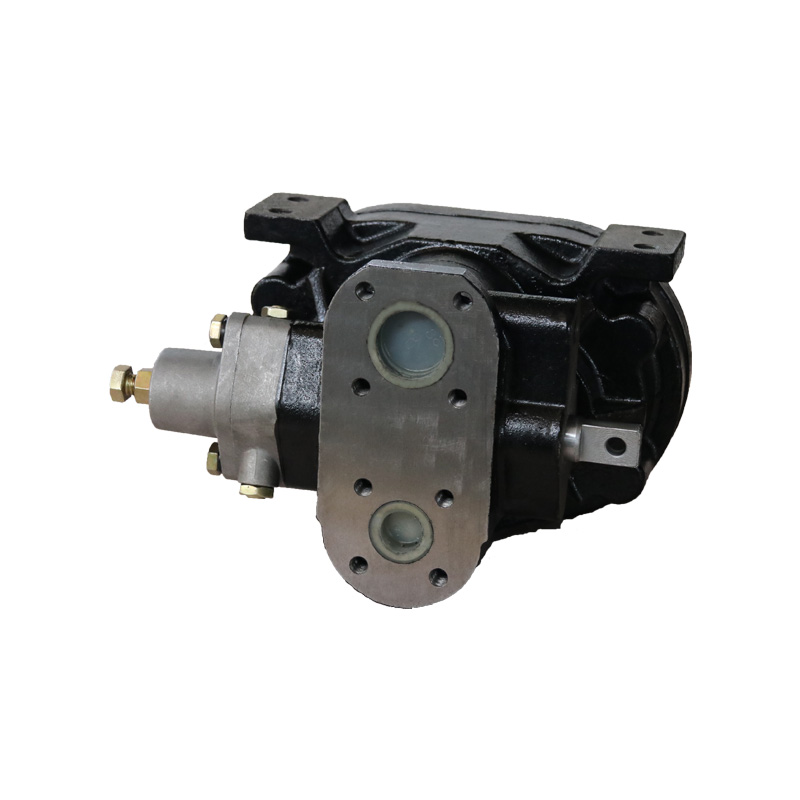
The operating process includes:
Fluid entering the inlet side as gear teeth disengage
Fluid being carried around the outer periphery of the gears
Fluid being discharged at the outlet as gear teeth re-engage
Because it is a positive displacement pump, a fixed volume of fluid is transported per rotation. Pressure in the system develops when flow encounters resistance in downstream components such as valves or actuators.
Hydraulic gear pumps are generally categorized into:
External gear pumps
Internal gear pumps
External gear pumps are more common in standard industrial and mobile hydraulic systems due to their straightforward configuration.
Technical Characteristics
Hydraulic gear pumps are often selected for applications requiring moderate pressure and consistent flow. Their technical characteristics typically include:
Simple mechanical structure with relatively few moving parts
Compact size suitable for limited installation space
Stable flow output at constant rotational speed
Compatibility with mineral-based hydraulic oils
Pressure ratings vary depending on design and materials, but many industrial gear pumps operate in low- to medium-pressure ranges compared to piston pumps.
In addition, manufacturing processes such as precision machining and surface hardening improve gear durability and reduce internal leakage. However, gear pumps are generally fixed displacement units, meaning flow rate depends directly on input speed.
Typical Application Fields
Hydraulic gear pumps are widely applied in sectors such as:
Construction machinery, including small loaders and lifting platforms
Agricultural equipment such as tractors and sprayers
Industrial hydraulic power units
Material handling equipment
Their relatively straightforward installation and maintenance requirements make them suitable for systems where pressure precision is not necessary. For many small and medium-scale hydraulic circuits, gear pumps provide an economical and technically adequate solution.
What Are the Problems with the Hydraulic Gear Pump?
Although hydraulic gear pumps are practical in many applications, they also present several technical and operational limitations. Understanding these issues is important for system designers and maintenance personnel.
Internal Leakage and Efficiency Reduction
One common issue is internal leakage. Because gear pumps rely on close clearances between gears and housing to maintain volumetric efficiency, wear over time can increase these clearances.
Typical causes include:
Abrasive contamination in hydraulic fluid
Prolonged operation at high pressure
Insufficient lubrication
As clearances increase, more fluid recirculates internally instead of being delivered to the system. This bring about reduced volumetric efficiency and lower output flow at a given speed. The result may be slower actuator movement or reduced system responsiveness.
Regular filtration and fluid monitoring are therefore necessary to maintain performance.
Noise and Vibration
Hydraulic gear pumps can generate noticeable noise and vibration during operation. This is largely due to:
Sudden trapping and release of fluid between gear teeth
Pressure pulsations at the discharge port
Mechanical meshing impact
In environments where noise control is important, such as indoor industrial settings, this characteristic may require additional damping measures. These may include flexible couplings, vibration isolation mounts, or acoustic enclosures.
Although noise levels vary by design, gear pumps are generally louder than vane pumps under comparable operating conditions.
Limited Pressure and Flow Control Flexibility
Another limitation is the fixed displacement nature of gear pumps. Because output flow is directly proportional to rotational speed:
Flow control requires speed regulation or external flow control valves
Energy losses may occur when excess flow is throttled
System efficiency may decrease in variable-load conditions
In contrast, variable displacement piston pumps can adjust output to match demand more precisely. For systems with fluctuating load requirements, gear pumps may not offer the same level of energy optimization.
Additionally, operating gear pumps beyond their rated pressure can accelerate wear, increase heat generation, and shorten service life.
Sensitivity to Contamination
While gear pumps are mechanically simple, they remain sensitive to contamination in hydraulic oil. Particulate matter can:
Scratch gear surfaces
Damage bearing surfaces
Increase internal leakage
Cause premature failure
Proper filtration and maintenance schedules are therefore essential. Inadequate maintenance practices are a frequent cause of performance degradation.
We focus on the research, development, manufacturing and service of various high-pressure and high-displacement gear pumps and related products and copper and woodblock printing machines.
Are You Ready To Cooperate
With Xianju Liming Machinery Co., Ltd. ?
* Your email is safe with us, we don't spam.

Xianju Liming Machinery Co., Ltd. specializes in the production of various high-pressure and high-displacement gear pumps and related products. We also specialize in producing various specifications of copperplate engraving machines, woodblock printing machines and other printmaking art equipment.
Contact Info
+86-13676695112
+86-18868136522
+86-576-87733908
+86-576-87719094
No. 407, Chuancheng North Road, Anzhou Street, Xianju County, Taizhou City, Zhejiang, China.
Mobile web
