 English
 中文简体
中文简体

+86-13676695112
+86-18868136522
+86-576-87733908
Flexible packaging continues to serve many product categories, because it can combine printed graphics with a lightweight package structure that's easy to ship. From food and household goods to personal care products, flexible materials need to carry useful information while also presenting a clear visual identity on the shelf. This makes film printing a genuinely important part of the packaging production workflow.
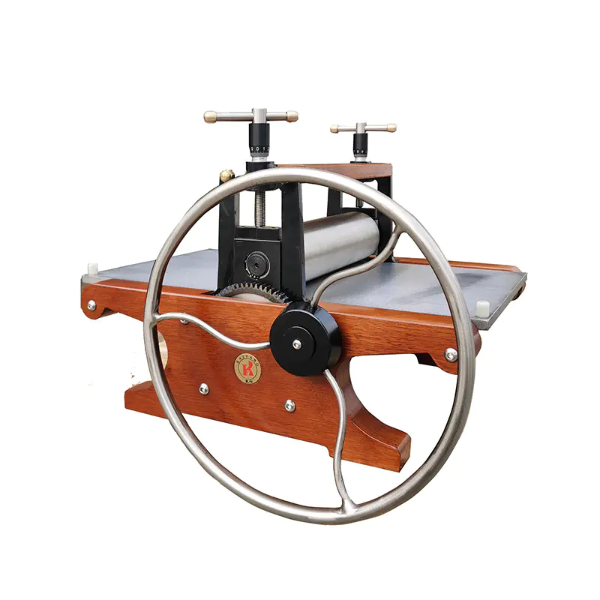
A Copper Plate Printing Press can support this process by transferring printed images onto flexible packaging materials in a controlled and repeatable way. Its role isn't limited to putting color onto film alone. It also connects artwork preparation, printing, material handling, drying, inspection, and later packaging processes into a more organized production flow.
Film printing gives flexible packaging its genuine visual information that customers see on a shelf. Product names, usage details, graphics, instructions, and other package elements may all depend on the quality of the printed surface underneath them. The printing process therefore needs to work with the characteristics of the packaging film, rather than treating the film like ordinary paper.
Flexible films can behave quite differently during production compared to rigid materials. They may be thin, smooth, soft, or sensitive to handling conditions in ways paper isn't. A printing system needs to move the material through the production process while keeping the printed image controlled the whole way through.
| Flexible Packaging Stage | Main Consideration | Relationship With Printing |
|---|---|---|
| Artwork preparation | Clear and organized package graphics | Defines the printed image |
| Film preparation | Suitable material condition | Supports stable printing |
| Film printing | Image transfer and registration | Creates package graphics |
| Drying and handling | Controlled movement of printed film | Protects printed surfaces |
| Inspection | Visual and production checks | Identifies printing issues |
| Further processing | Lamination, slitting, forming, or sealing | Depends on usable printed film |
The printing stage also has to fit the later steps of package production that come after it. Printed film may continue toward processes such as laminating, slitting, forming, filling, or sealing before it becomes a finished pouch on a store shelf. If the printed image doesn't work well with these stages, problems can appear later even when the printing itself looked acceptable at the time.
A suitable printing process therefore needs to consider the entire product journey from start to finish. Instead of viewing the press as an isolated machine sitting in one corner of the factory, packaging producers can treat it as one part of a connected manufacturing system.
A Copper Plate Printing Press is designed around a printing process, in which an engraved plate transfers ink to the packaging material as it passes through. The plate carries the image information, while the press controls the movement of the film through the printing area itself. This structure allows detailed package graphics to get reproduced across flexible materials consistently.
The relationship between the plate and the film matters a great deal, because flexible packaging often contains repeated images across a continuous material roll running through the machine. The press must keep the film moving in an organized manner while maintaining the intended position of the printed image throughout the run.
| Press Function | Practical Role |
|---|---|
| Plate engraving | Carries the image information |
| Film transport | Keeps material moving consistently |
| Ink transfer | Reproduces the design onto the surface |
| Registration control | Maintains image position across the roll |
| Handling stages | Guides film toward the next process |
Ink transfer is also genuinely closely related to the surface of the film being printed on. Different packaging materials can respond quite differently during printing, depending on their texture and coating. A production workflow may therefore include material preparation and process checks, to make sure the selected printing approach actually matches the film being used that day.
The press also works as part of a larger material path stretching across the factory floor. Film enters the printing area, receives the image, passes through the necessary handling stages, and continues toward the next production step down the line. Good coordination between these stages can reduce unnecessary interruptions and make the workflow a lot easier to manage overall.
Printing quality doesn't only affect how a package looks sitting on a store shelf. It can also influence how easily printed film moves into later production stages further down the line. A printed film that requires repeated adjustment or inspection can place additional pressure on the rest of the workflow behind it.
Packaging graphics often need to appear in genuinely specific positions on the final package structure. Text, images, symbols, and other elements may need to remain visually aligned with the package structure itself, especially around fold lines or seal areas. When the printing process maintains a stable image position, downstream operations can work with a lot more predictable material.
| Downstream Stage | Printing Quality Dependency |
|---|---|
| Lamination | Needs consistent image alignment |
| Slitting | Depends on stable registration |
| Forming | Requires predictable material behavior |
| Sealing | Relies on accurate graphic placement |
| Filling | Needs readable product information intact |
This relationship becomes a lot more noticeable, when flexible packaging involves multiple production stages stacked one after another. Printed film may get combined with another material before being converted into a finished package ready for filling. The printed surface must remain suitable for the next process, rather than being considered complete immediately after leaving the press.
A Copper Plate Printing Press can therefore contribute to workflow stability, when its printing process gets coordinated with material movement and downstream requirements throughout the line. The goal isn't simply attractive graphics sitting on a spool. It's usable printed material that can continue through the packaging line without creating headaches later.
Packaging design often begins with an idea sketched on a screen, but the final package has to reproduce that idea on a physical material that actually holds a product. Printing equipment becomes the genuine bridge between digital artwork and the finished film customers hold in their hands. This makes the capabilities of the press relevant to how designers approach flexible packaging from the earliest stages.
Detailed graphics can be genuinely important for packaging that needs to communicate product information within a limited surface area, like a small snack pouch. Small text, illustrations, color areas, and repeated design elements all need consideration during artwork development before anything gets sent to production. Designers and production teams can work together to make sure the artwork is suitable for the chosen printing process from the start.
| Design Element | Production Consideration |
|---|---|
| Small text | Needs sufficient printing clarity |
| Illustrations | Depends on ink and plate detail |
| Color areas | Affected by film surface response |
| Repeated patterns | Requires consistent registration |
| Product information | Must remain legible after conversion |
The material itself also affects design decisions in ways that aren't always obvious upfront. A film may have a genuinely different surface appearance or visual response than another packaging material sitting on the same shelf. This can change how colors, contrast, and image details actually get perceived after printing finishes.
For this reason, packaging development genuinely benefits from communication between design and production teams working closely together. A design that looks good on a screen still needs evaluation in relation to the printing process, film structure, and final package format it'll end up in.
Flexible packaging gets used in many forms across countless products on store shelves, so a single production workflow may need to handle different package designs and material combinations without much downtime. The printing process needs to provide enough flexibility to support changing product requirements, without creating unnecessary complexity for the operators running the line.
Different packages can have genuinely different visual structures depending on their category. One package may rely heavily on large graphic areas to catch a shopper's eye, while another may need more space for text and product information required by regulation. Some designs may also require repeated patterns or carefully positioned images that align with fold lines.
| Common Flexible Packaging Application | Printing Consideration |
|---|---|
| Food packaging | Works with materials used in final food package structure |
| Household products | Keeps instructions and descriptions organized across repeats |
| Personal care products | Reproduces intended visual layout accurately |
| Industrial packaging | Communicates identification and handling information clearly |
The production team can organize the printing workflow around these differences without reinventing the process each time. Artwork preparation, plate preparation, material selection, press setup, inspection, and post-print handling all play a role in the sequence. When these activities get connected properly, changing from one package design to another becomes a lot easier to manage on a busy production schedule.
A Copper Plate Printing Press can fit this approach, because the printing plate acts as a physical representation of the package artwork itself. Different designs can get prepared for different packaging projects, allowing the production process to respond to varied product requirements without starting from scratch every time.
These applications show why flexible packaging printing can't get separated from the package's intended use in the real world. The production process needs to respond to both visual requirements and practical packaging functions that keep products safe and identifiable.
Film movement is a genuinely major part of flexible packaging production that's easy to overlook. Unlike rigid sheets stacked in a tray, flexible film travels through the press as a continuous material unwinding from a roll. Its condition and movement can influence how consistently the printed image reaches the intended position across the whole run.
Handling also matters after printing finishes for that particular batch. The printed film may need to move through drying, inspection, rewinding, or another processing stage before it's ready for the next step. Each transition creates an opportunity for the material to get affected by tension, contact, or surface handling along the way.
| Handling Stage | Potential Risk | Practical Response |
|---|---|---|
| Film entry | Uneven feeding | Consistent tension control |
| Printing area | Registration drift | Stable material path |
| Drying | Surface disturbance | Careful airflow management |
| Rewinding | Tension variation | Monitored winding speed |
| Transfer to next stage | Contact damage | Protected handoff points |
A well-organized workflow considers these transitions instead of focusing only on the printing point itself as if it existed in isolation. Operators need to understand how the material enters the press, travels through the printing area, and exits toward the next stage waiting down the line.
This is also genuinely useful for production planning across a full shift. When material handling is predictable, operators can spend a lot more attention on process monitoring and a lot less on unnecessary corrections that eat into their day. It creates a more connected relationship between printing and the rest of packaging production happening around it.
Inspection helps packaging producers identify issues before printed film moves too far through the workflow and becomes harder to fix. The purpose isn't simply rejecting material that doesn't meet standards. It's providing information that can help production teams understand whether the printing process is operating as intended that day.
Visual checks may look at image clarity, color appearance, registration, missing areas, unwanted marks, or other visible conditions that show up on the film. The exact inspection approach can vary quite a bit with the packaging material and product requirements involved.
| Inspection Focus | What It Reveals |
|---|---|
| Image clarity | Whether printing detail meets expectations |
| Color appearance | Consistency across the printed run |
| Registration | Alignment of repeated elements |
| Missing areas | Gaps in ink coverage |
| Unwanted marks | Contamination or handling damage |
Inspection is particularly useful when printed film will continue into additional processes further down the line. An issue that seems genuinely minor during printing may become a lot more noticeable after lamination, slitting, or package forming once the film has been transformed. Detecting problems earlier gives the production team a lot more opportunities to respond before more material gets committed.
Digital inspection tools can also become part of modern packaging workflows running alongside traditional methods. They can support operator observation and provide another layer of process information worth reviewing. Human review remains genuinely important, because packaging quality involves both visual appearance and practical production requirements that a camera alone might miss.
Flexible packaging production is becoming genuinely more connected across every stage of the process. Printing is no longer viewed only as an individual operation sitting between material preparation and finishing on its own. Producers are increasingly considering how artwork, materials, printing, inspection, and downstream conversion can work together as one system.
This approach can influence equipment planning quite a bit when a factory is deciding what to invest in. A press needs to fit the materials and package formats that a producer expects to handle across their product line. It also needs to work with the available production space, operator routines, inspection methods, and later processing stages already in place.
| Planning Area | Question Worth Asking |
|---|---|
| Equipment fit | Does the press handle expected materials and formats? |
| Process coordination | Does information move clearly between teams? |
| Adaptability | Can the workflow respond to varied product requirements? |
| Space and routines | Does the equipment fit existing operator habits? |
| Inspection integration | Does quality control connect with printing decisions? |
Process coordination is another genuinely important consideration worth building into daily operations. When information moves clearly between design, printing, quality control, and packaging production teams, potential problems can get identified a lot earlier in the process. This can help reduce unnecessary rework and support a more stable workflow across the whole facility.
Manufacturers of printing equipment are also paying attention to changing packaging requirements coming from their customers. Flexible packaging can involve different film structures, visual designs, package formats, and production arrangements depending on the client. Equipment development therefore needs to consider adaptability, rather than focusing on one narrow application that might not hold up over time.
The role of the Copper Plate Printing Press can be understood within this wider shift happening across the industry. Its value comes from how well it connects image reproduction with material movement, inspection, and later packaging operations throughout the line. As flexible packaging continues to develop, printing equipment will remain closely tied to the way packaging producers organize their complete production workflow from artwork to finished pouch.
We focus on the research, development, manufacturing and service of various high-pressure and high-displacement gear pumps and related products and copper and woodblock printing machines.
Are You Ready To Cooperate
With Xianju Liming Machinery Co., Ltd. ?
* Your email is safe with us, we don't spam.

Xianju Liming Machinery Co., Ltd. specializes in the production of various high-pressure and high-displacement gear pumps and related products. We also specialize in producing various specifications of copperplate engraving machines, woodblock printing machines and other printmaking art equipment.
Contact Info
+86-13676695112
+86-18868136522
+86-576-87733908
+86-576-87719094
No. 407, Chuancheng North Road, Anzhou Street, Xianju County, Taizhou City, Zhejiang, China.
Mobile web
