 English
 中文简体

+86-13676695112
+86-18868136522
+86-576-87733908
A hydraulic gear pump can meet its catalogue ratings and still be the wrong choice for a machine. Flow may drop under load, operating temperature may climb, or the pump may wear out sooner than expected. Problems like these often come from a mismatch between the pump and the conditions it actually has to handle.
For OEM manufacturers, supplier comparisons need to go beyond price and delivery dates. The figures worth examining include displacement, pressure limits, speed range, efficiency, and material compatibility. Test records and manufacturing consistency also matter, particularly when pumps will be ordered in production quantities.
Compare Displacement, Flow Rate, and Operating Speed
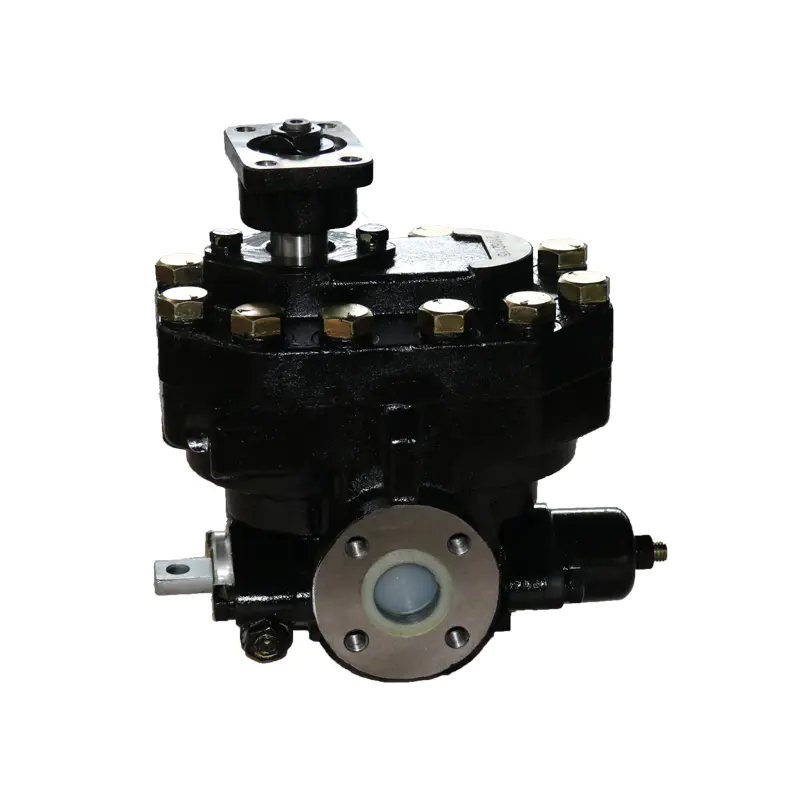
Displacement, usually given in cm³/rev, tells you how much fluid the pump is intended to move with each shaft revolution. Combine that figure with rotational speed and you get theoretical flow. A 25 cm³/rev pump running at 1,500 rpm, for instance, has a theoretical output of 37.5 L/min.
That number is not the flow the machine will necessarily receive. Internal leakage reduces actual delivery, and the difference changes with operating conditions.
When comparing models, look at the full operating range rather than one figure on a datasheet. Relevant details include:
A pump that supplies enough oil at rated speed may fall short when the machine runs more slowly or its speed varies during a working cycle. Performance data across the intended rpm range will show whether that is likely to be a problem.
Verify Pressure Ratings and Duty Conditions
Pressure figures need to be read in context. Continuous pressure applies to sustained operation under specified conditions. Intermittent pressure is allowed only for limited periods, while peak pressure covers brief pressure spikes. A pump's peak rating is not a substitute for its continuous rating.
The datasheet should make these distinctions clear. Other figures also deserve attention:
| Technical specification | What buyers should check | Why it matters |
|---|---|---|
| Displacement | cm³/rev | Determines theoretical flow |
| Continuous pressure | Rated working pressure | Indicates sustained operating capability |
| Intermittent pressure | Permitted duration and frequency | Defines short-term overload limits |
| Maximum speed | Rated rpm range | Prevents overspeed damage |
| Volumetric efficiency | Performance at specified pressure and speed | Indicates internal leakage losses |
| Operating temperature | Approved fluid temperature range | Supports reliable operation |
| Inlet pressure | Minimum and maximum permitted conditions | Helps prevent cavitation and filling problems |
Pay attention to the conditions behind the ratings, including speed and fluid temperature. A high pressure figure means little if the pump can only tolerate it briefly, while the machine requires sustained operation.
Evaluate Efficiency and Heat Generation
Not all the power supplied to a pump becomes useful hydraulic output. Some is lost through internal leakage and some through friction.
Volumetric efficiency compares actual flow with theoretical flow. As pressure rises, leakage through internal clearances can increase, lowering delivered flow. Mechanical efficiency accounts for friction and other mechanical resistance. Overall efficiency reflects both losses.
Efficiency data should relate to the intended pressure, speed, and fluid viscosity. A single percentage gives little indication of performance across different conditions. Low efficiency also means more energy is being lost as heat. Over time, excessive temperature can accelerate oil oxidation, damage seals, and shorten pump life.
Check Materials, Sealing, and Fluid Compatibility
A pump's internal construction needs to suit the fluid it will handle. Housing and gear materials, shaft treatment, bearings, and seals all influence how the unit holds up in service.
The supplier's material information should cover:
Seal compatibility can be easy to overlook. A compound that works with mineral oil may react differently to a synthetic fluid. Swelling, hardening, or gradual deterioration can follow, so the specified seal material needs to match the hydraulic medium in use.
Compare Port Dimensions and Installation Requirements
Even when the performance figures match, differences in mounting or connections can prevent a pump from fitting the equipment. Shaft diameter and configuration, mounting flange, rotation direction, inlet and outlet port sizes, and overall dimensions all need to match the design.
Standard configurations may be sufficient for some machines; others may require customized ports or mounting arrangements.
The inlet side is worth checking before installation. An undersized supply line or inadequate inlet pressure can leave the pump short of oil and cause cavitation. Noise and vibration may appear first, followed by surface damage inside the pump. Fluid viscosity and reservoir position also affect oil supply.
Assess Manufacturing Quality and Supplier Testing
A datasheet describes the product; it does not show how consistently the product is made. Find out how the supplier handles dimensional inspection, material verification, pressure testing, leakage checks, and performance testing.
Useful records include:
Batch consistency is a practical concern for OEM buyers. One sample may meet the required figures, but that alone says little about units made months later. The supplier should be able to explain how production tolerances are maintained and how completed pumps are checked before shipment.
Match Supplier Capabilities to Long-Term Requirements
Technical compliance at the time of purchase is only part of the decision. A production project may later need design changes, replacement parts, or additional units on a regular schedule. Engineering support, customization, available production capacity, and delivery consistency all have a bearing on that relationship.
Before a large order goes ahead, test sample pumps in conditions close to those of the finished machine. Record flow, pressure, temperature, noise, and leakage where relevant. Catalogue figures are useful, but they cannot account for every detail of the actual hydraulic circuit.
Comparing these points gives OEM buyers a clearer view of both the pump and the supplier behind it. It also makes potential problems easier to identify before they become equipment or production issues.
We focus on the research, development, manufacturing and service of various high-pressure and high-displacement gear pumps and related products and copper and woodblock printing machines.
Are You Ready To Cooperate
With Xianju Liming Machinery Co., Ltd. ?
* Your email is safe with us, we don't spam.

Xianju Liming Machinery Co., Ltd. specializes in the production of various high-pressure and high-displacement gear pumps and related products. We also specialize in producing various specifications of copperplate engraving machines, woodblock printing machines and other printmaking art equipment.
Contact Info
+86-13676695112
+86-18868136522
+86-576-87733908
+86-576-87719094
No. 407, Chuancheng North Road, Anzhou Street, Xianju County, Taizhou City, Zhejiang, China.
Mobile web
