 English
 中文简体

+86-13676695112
+86-18868136522
+86-576-87733908
A hydraulic excavator parked outside overnight in freezing weather may behave very differently during its first few minutes of operation than it does later in the day. The engine starts, but the boom and bucket respond slowly. The hydraulic pump may produce unusual noise, and the machine takes longer to respond to operator commands.
Cold hydraulic oil is often part of the problem. As temperature falls, oil viscosity increases, making it harder to draw fluid through the suction line and move it through the pump. This puts additional demands on the pump during startup. For equipment manufacturers working with Hydraulic Gear Pumps Suppliers, winter performance needs to be considered during pump selection and hydraulic circuit design, not left until the machine enters field service.
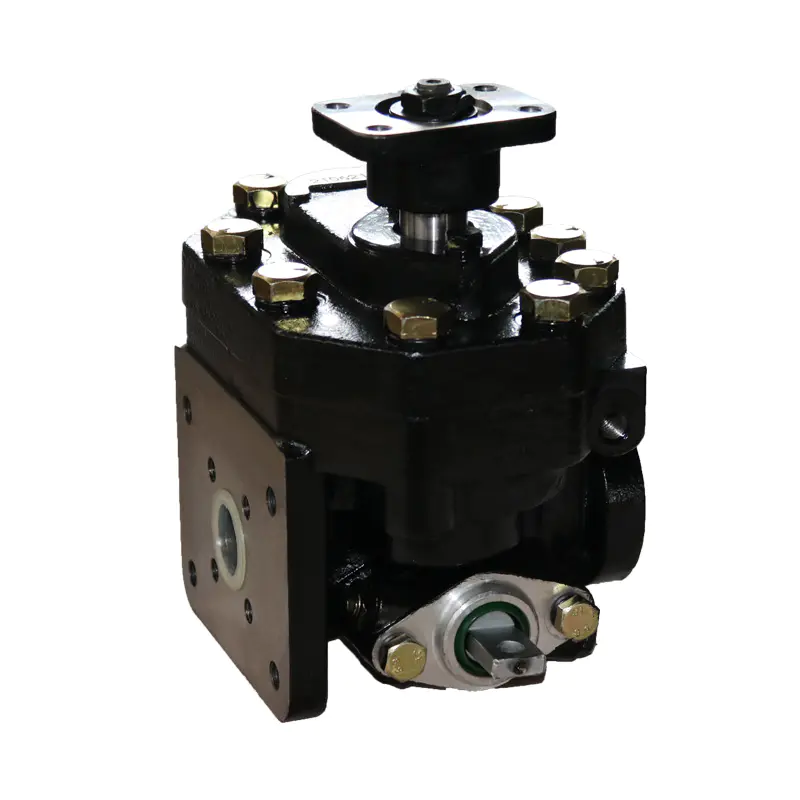
Why Gear Pumps Struggle With Cold Hydraulic Oil
An external gear pump moves oil through the spaces between the gear teeth and the pump housing. As the gears rotate, they carry fluid from the inlet side to the outlet side.
The principle is straightforward, but cold oil changes how easily this movement takes place. Thick oil creates greater resistance in the suction pipe, filters and internal passages. The pump may have difficulty receiving enough fluid, particularly during initial startup when the oil has not yet circulated.
Operators may notice delayed actuator movement, unusual pump noise or increased engine load. In severe cases, inadequate inlet supply can contribute to cavitation and damage to internal surfaces.
The problem is not necessarily a defective pump. A pump designed for normal operating temperatures may simply be connected to a hydraulic circuit that cannot supply sufficiently viscous oil under cold conditions.
Internal Clearances and Housing Materials Matter
The small gaps between gears, bearings and housing surfaces are carefully controlled during manufacturing. These clearances influence both internal leakage and mechanical friction.
If the gaps are too tight, changes in dimensions and the resistance created by cold oil can make rotation more difficult. If they are too large, excessive internal leakage may reduce volumetric efficiency once the oil reaches its normal operating temperature.
Housing material also plays a part. Cast iron is commonly used in heavy-duty gear pumps because of its strength and dimensional stability. Aluminum offers a weight advantage and is used in applications where reducing equipment mass is important.
Manufacturers need to consider material expansion, machining tolerances and the intended temperature range together. Adjusting clearances for one operating condition without checking the others can create problems after the machine warms up.
The Hydraulic Oil Must Remain Pumpable at Startup
Choosing hydraulic oil based on its normal operating viscosity is not enough for equipment used in cold climates. The fluid must also flow adequately at the lowest expected starting temperature.
Several properties are worth checking:
For equipment manufacturers, the oil recommendation should account for both winter starting conditions and normal working temperatures. An oil that flows well in cold weather must still provide adequate lubrication once the hydraulic system reaches operating temperature.
Don't Overlook the Pump Inlet Circuit
A common mistake in hydraulic system design is to concentrate on pump specifications while giving too little attention to the suction side.
When cold oil passes through a narrow pipe or restrictive filter, the pressure drop can become substantial. The pump may then receive less oil than required, regardless of its nominal displacement.
| System Component | Possible Cold-Weather Problem | Design Consideration |
|---|---|---|
| Suction Pipe | Excessive pressure drop | Appropriate diameter |
| Suction Hose | High flow resistance | Short routing and fewer bends |
| Inlet Filter | Increased restriction | Suitable cold-start flow capacity |
| Reservoir | Poor oil supply to inlet | Correct fluid level and inlet position |
| Hydraulic Oil | Excessive viscosity | Approved low-temperature fluid |
| Pump Drive | High startup load | Follow specified startup speed limits |
Filters deserve particular attention. A filter that works normally at room temperature may become a significant restriction when oil viscosity rises. Engineers should check the manufacturer's pressure-drop data under the expected cold-start conditions.
Startup Speed and Warm-Up Procedures
Starting a machine and immediately operating its hydraulic functions at full load can place unnecessary stress on a cold pump.
Some equipment manufacturers use controlled startup sequences to allow oil circulation before the machine performs demanding movements. Depending on the system, this may involve limiting engine speed initially and gradually increasing hydraulic demand.
Operators should also check the reservoir level and look for restrictions in the suction line before startup. Once the pump is running, hydraulic functions should be operated according to the equipment manufacturer's warm-up instructions.
A fixed warm-up time cannot be applied to every machine. Oil type, ambient temperature, reservoir capacity and pump design all influence how quickly the system becomes ready for normal operation.
Running at extremely low speed for too long is not necessarily beneficial either. The pump still needs adequate lubrication and circulation, so the manufacturer's specified startup procedure should take priority.
What Should Cold-Start Testing Include?
A pump's rated flow and pressure at normal temperature tell buyers very little about its behavior after sitting overnight in freezing conditions.
For OEM equipment, cold-start validation should use the intended hydraulic oil and a representative inlet arrangement. Testing only the pump on a laboratory stand may overlook restrictions created by the actual hoses, filters and reservoir.
Useful measurements include startup torque, inlet pressure, initial flow delivery and pressure stability. Engineers should also monitor abnormal noise, vibration, operating temperature and leakage.
Repeated cold-start cycles can reveal problems that a single test may miss. For example, a pump might operate successfully during its first startup but show increasing wear after repeated exposure to low-temperature conditions.
Test reports should identify the oil grade, test temperature, pump speed and other relevant conditions. Without this information, comparing results from different suppliers becomes difficult.
What to Discuss With Hydraulic Gear Pumps Suppliers
When requesting quotations, equipment manufacturers should provide more information than displacement and maximum pressure. The supplier needs to understand the machine's starting temperature, normal working temperature, oil specification and hydraulic circuit arrangement.
Ask for recommended viscosity limits, performance curves, material specifications and any available cold-start test records. For equipment operating in remote construction or mining locations, practical technical support and replacement-part availability are also important.
A supplier familiar with winter-operated machinery may identify problems in the suction layout or fluid specification before production begins. That input can be more valuable than choosing a pump based solely on its catalogue rating.
Cold-Weather Performance Starts With the Complete Hydraulic System
A gear pump cannot be evaluated independently of the oil it handles and the circuit supplying it. Tight internal clearances, restrictive suction plumbing or an unsuitable fluid can all make cold starts more difficult.
When sourcing from Hydraulic Gear Pumps Suppliers, equipment manufacturers should specify the actual winter operating conditions and validate the complete pump arrangement before mass production. A pump that starts reliably with the intended oil, filter and inlet configuration is a much better choice than one that only meets its rated performance under normal laboratory temperatures.
We focus on the research, development, manufacturing and service of various high-pressure and high-displacement gear pumps and related products and copper and woodblock printing machines.
Are You Ready To Cooperate
With Xianju Liming Machinery Co., Ltd. ?
* Your email is safe with us, we don't spam.

Xianju Liming Machinery Co., Ltd. specializes in the production of various high-pressure and high-displacement gear pumps and related products. We also specialize in producing various specifications of copperplate engraving machines, woodblock printing machines and other printmaking art equipment.
Contact Info
+86-13676695112
+86-18868136522
+86-576-87733908
+86-576-87719094
No. 407, Chuancheng North Road, Anzhou Street, Xianju County, Taizhou City, Zhejiang, China.
Mobile web
