 English
 中文简体
中文简体

+86-13676695112
+86-18868136522
+86-576-87733908
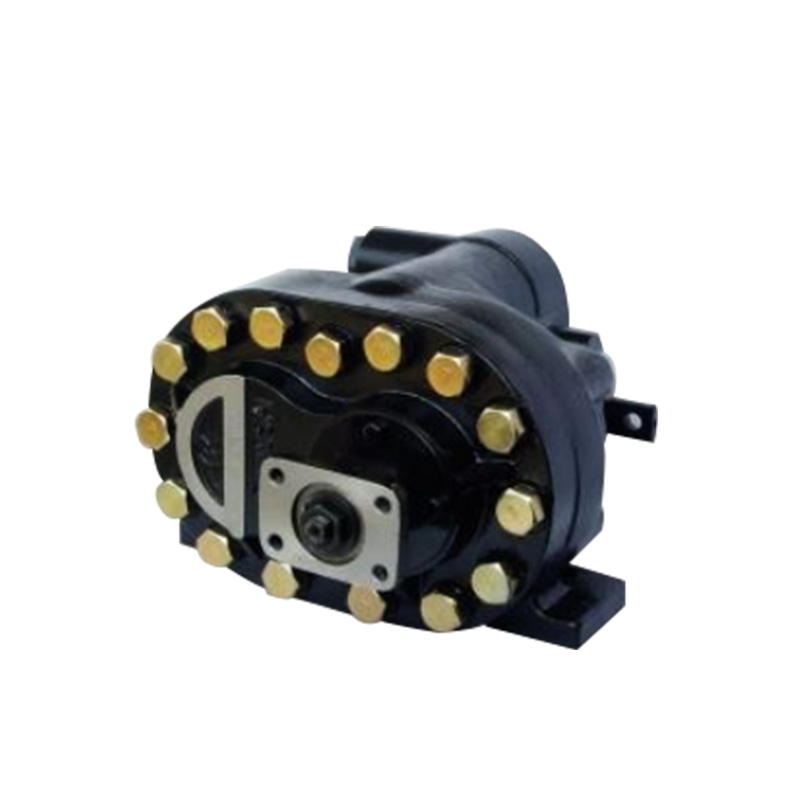
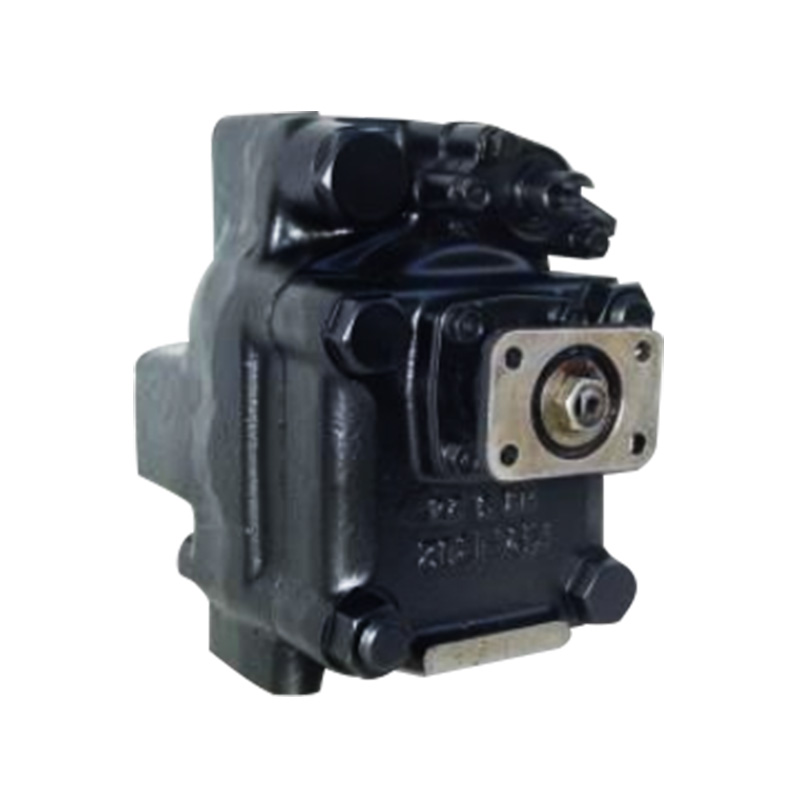
The design adaptations for high pressure focus on managing internal forces, leakage, and wear. A primary feature is the use of pressure-compensated side plates or wear plates. These are floating plates on the sides of the gears. Hydraulic pressure from the outlet port is directed behind these plates, pushing them firmly against the sides of the gears. This automatic compensation maintains a minimal, controlled axial clearance as the pump wears, reducing internal leakage and sustaining volumetric efficiency at high pressure.
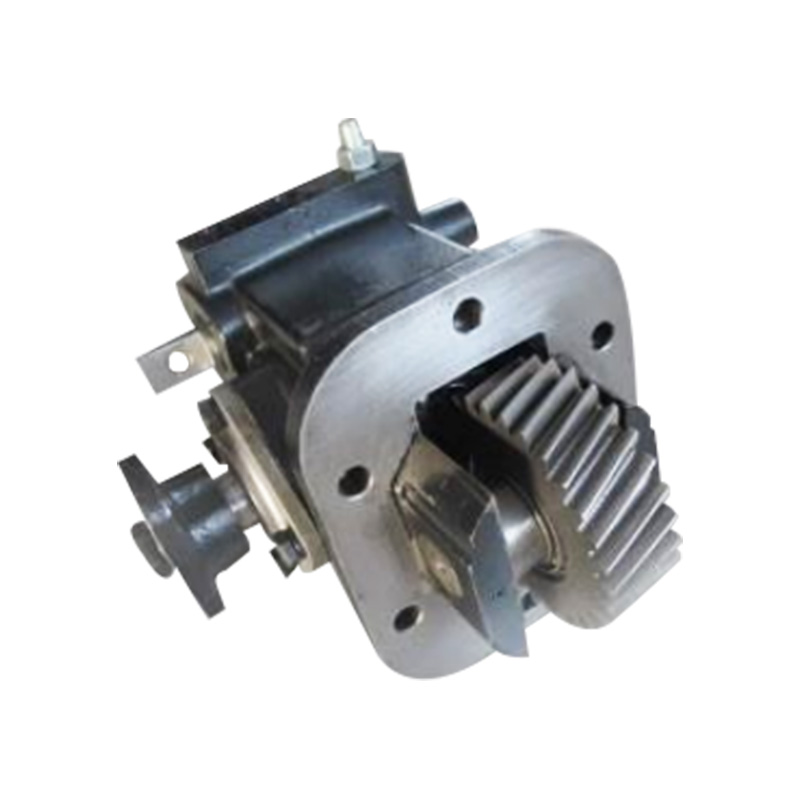
Other design elements include robust bearing systems to handle the high radial loads from the pressurized gears on their shafts, often using hydrodynamic journal bearings or anti-friction bearings. The gears and shafts are typically made from hardened alloy steels to resist deformation. The housing is constructed from high-strength materials with adequate wall thickness to contain the pressure without excessive distortion.
The inherent limitations stem from its fixed-displacement, fixed-clearance design. Pressure-induced deflection of the housing and components can alter internal clearances, affecting efficiency. High pressure exacerbates internal leakage (slip), which is the fluid that bypasses the gears through clearances; this leakage increases with pressure and reduces flow output. Furthermore, operation at the upper limit of its pressure rating can bring about accelerated wear and reduced service life due to the high mechanical and hydraulic stresses on gears, bearings, and seals.
Failure modes are often linked to fluid condition, operating parameters, and external system issues. Fluid contamination is the common cause of premature failure. Abrasive particles larger than the internal clearances (often as small as 5-10 microns) can score the gears, wear plates, and bearings, bring about increased internal leakage, loss of pressure, and eventual seizure. Mitigation requires rigorous filtration, typically with a beta-rated filter on the inlet and high-pressure side, and maintaining fluid cleanliness to the manufacturer's specified ISO code.
Cavitation is another critical failure mode. It occurs when the pump inlet is starved of fluid, causing vapor bubbles to form and then implode violently as they reach the high-pressure zone. This causes erosion of gear teeth and housing surfaces, bring about pitting and material loss. Prevention involves ensuring adequate inlet conditions: using a flooded inlet, large-diameter suction lines, a properly sized inlet filter, and sometimes a boost pump to maintain positive inlet pressure.
Overheating and excessive wear result from operating beyond design limits. Running at pressures near the rating for extended periods generates substantial heat from internal friction and fluid compression. Combined with high fluid temperatures, this degrades the oil, reduces lubrication, and accelerates wear. Mitigation involves selecting a pump with a pressure rating that provides a margin above the normal system operating pressure, using a properly sized heat exchanger, and ensuring the fluid viscosity is within the pump's specified range.
These pumps are selected for their combination of simplicity, compactness, and ability to generate high pressure in continuous duty. Common applications include mobile hydraulic systems in construction and agricultural machinery (e.g., for boom and tool circuits), industrial hydraulic power units for clamps, presses, and machine tools, and certain lubrication systems for large equipment.
Other pump types are often preferred when specific performance characteristics are required. Axial piston pumps are typically chosen over gear pumps for the pressure applications (above 350 bar) and where variable displacement and high overall efficiency are necessary, such as in sophisticated closed-loop hydrostatic drives. Vane pumps may be selected for mid-pressure applications requiring quieter operation and smoother flow. The choice of a high pressure gear pump is often based on a balance of cost, pressure requirement, and the acceptable level of flow pulsation and noise for the application.
Viscosity and temperature have a direct and interrelated impact on pump operation and lifespan. The fluid's viscosity provides the essential liquid film for lubrication between the gears, shafts, and bearings. If the viscosity is too low (from high temperature or a thin fluid), this film can break down, bring about metal-to-metal contact, increased wear, and reduced volumetric efficiency due to higher internal leakage. Conversely, if the viscosity is too high (from cold starts or using overly thick oil), the pump requires more torque to turn, which can cause cavitation at the inlet due to flow resistance and may overload the drive motor.
High pressure gear pump manufacturers specify a recommended operating viscosity range. Operating outside this range can bring about the failures described. Temperature is the primary driver of viscosity change. A comprehensive system design, therefore, includes monitoring and controlling fluid temperature within a stable band using coolers or heaters as needed. The pump's rated performance is based on a specific test viscosity, and deviations in the field will result in measurable changes in flow output, torque requirement, and efficiency.
We focus on the research, development, manufacturing and service of various high-pressure and high-displacement gear pumps and related products and copper and woodblock printing machines.
Are You Ready To Cooperate
With Xianju Liming Machinery Co., Ltd. ?
* Your email is safe with us, we don't spam.

Xianju Liming Machinery Co., Ltd. specializes in the production of various high-pressure and high-displacement gear pumps and related products. We also specialize in producing various specifications of copperplate engraving machines, woodblock printing machines and other printmaking art equipment.
Contact Info
+86-13676695112
+86-18868136522
+86-576-87733908
+86-576-87719094
No. 407, Chuancheng North Road, Anzhou Street, Xianju County, Taizhou City, Zhejiang, China.
Mobile web
